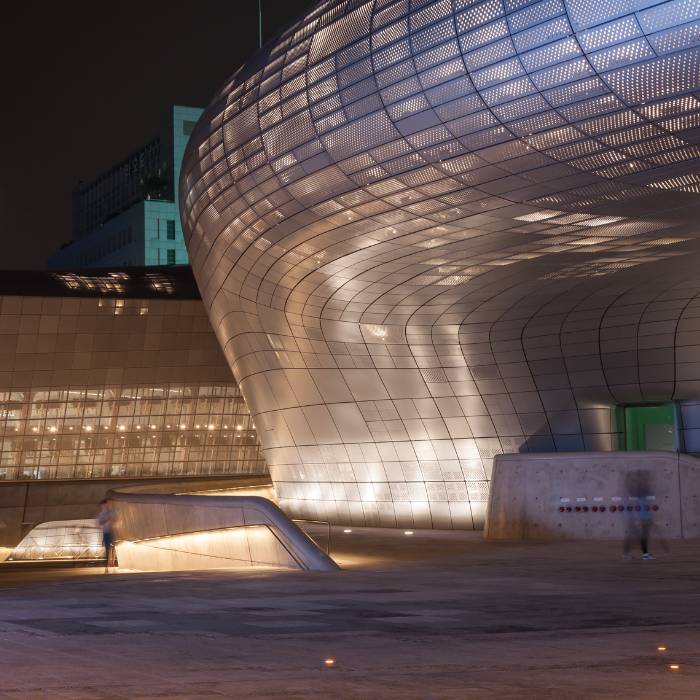
During my recent week in Seoul, I set aside two full days to explore the National Museum of Modern and Contemporary Art (MMCA) — starting downtown at the Seoul branch, then wandering through the historic galleries tucked inside Deoksugung Palace. Here’s what I found at each stop, plus what I’m saving for a future visit.
Introduction to MMCA Korea’s Leading Art Institution
The National Museum of Modern and Contemporary Art, Korea (MMCA) stands as the country’s foremost art institution, showcasing over five decades of dedication to preserving and promoting Korean modern and contemporary art. Established in 1969, this prestigious museum has evolved into a network of four distinctive venues, each offering visitors a unique perspective on Korea’s vibrant art scene. For art enthusiasts planning a trip to Korea, the MMCA provides an essential cultural experience that reveals the nation’s artistic evolution alongside global contemporary movements.
You can find comprehensive information about exhibitions, programs, and visiting hours on the museum’s official website at https://www.mmca.go.kr/eng/.
MMCA Seoul & Deoksugung: The Two Branches I Visited
MMCA actually runs four branches across the country — Seoul, Deoksugung, Gwacheon, and Cheongju — but with only a few days in the city, I could realistically fit in two of them. I picked Seoul and Deoksugung since both sit right in the downtown area and could be combined with other sightseeing, and I’m already planning to save Gwacheon and Cheongju for a future trip.
MMCA Deoksugung: Modern Art in a Historical Palace
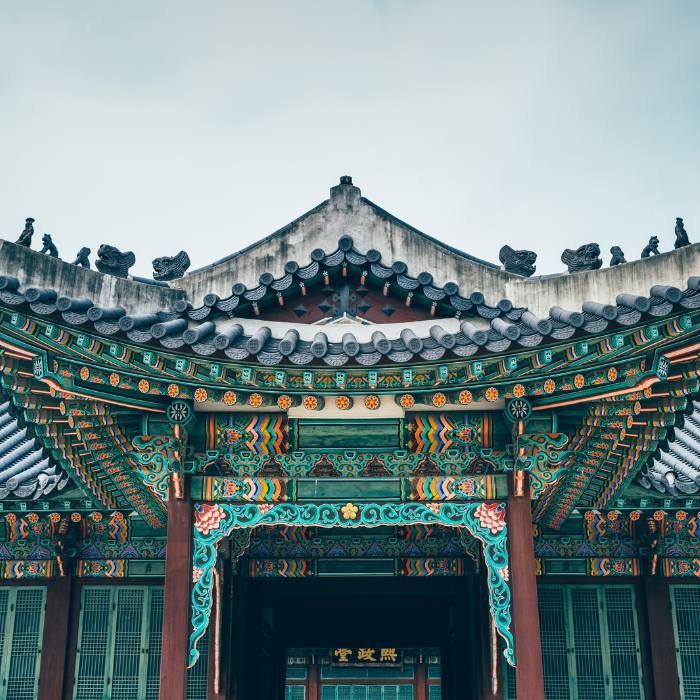
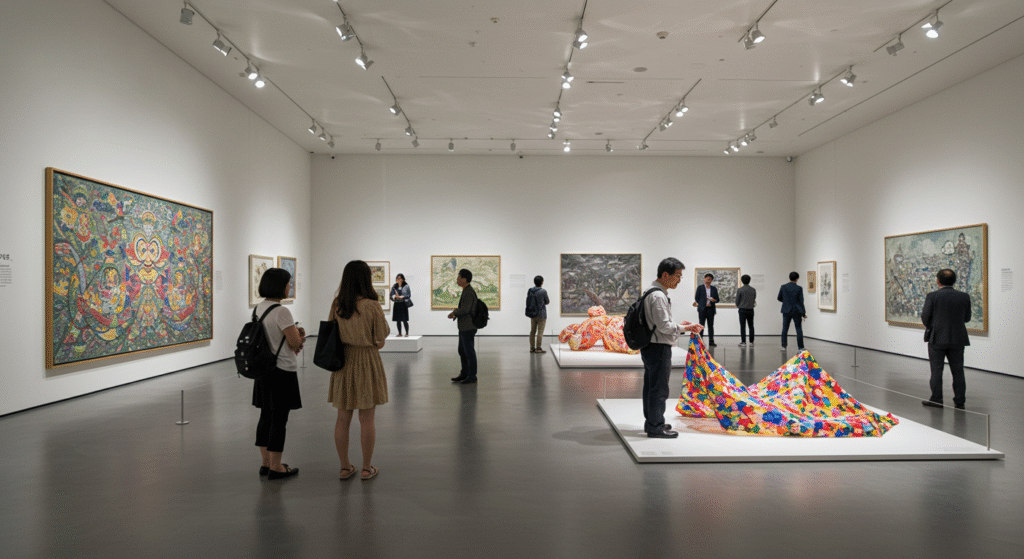
My first stop was Deoksugung Palace, and I almost walked past the museum entirely — MMCA’s galleries sit quietly in the western wing of Seokjojeon Hall, tucked among the palace’s stone gates and courtyards. Walking from the palace’s main entrance to the gallery felt like passing through two eras at once: visitors in rented hanbok posing for photos outside, then modern Korean paintings from the late 1930s onward filling the neoclassical stone halls inside. The building itself, constructed in 1938, has high ceilings and heavy stone columns that made every piece feel like part of a much longer story.
Wandering through the galleries, I noticed the collection leans heavily into:
- Korean modern art from the early to mid-20th century
- The intersection of traditional Korean aesthetics with Western influences
- Special exhibitions highlighting pivotal moments in Korea’s art history
What struck me most was the setting itself. After an hour inside, I stepped back out into the palace courtyard and the contrast was jarring in the best way — stone galleries full of 20th-century paintings on one side, centuries-old palace architecture on the other. If you’re already visiting Deoksugung’s palace grounds, I’d genuinely build in an extra hour for the museum wing; it’s easy to walk right past the entrance without realizing it’s there.
Source: “MMCA Seoul, the national museum of modern and contemporary art “produced by Soo Choi
MMCA Seoul: Contemporary Art in the Urban Center
The next day I took the subway to Sogyeok-dong, just a short walk from Gyeongbokgung Palace, to see MMCA Seoul. The branch opened in 2013 on the site of the former Defense Security Command headquarters, and you can still feel traces of that history in the layout — low brick structures sit alongside sleek new galleries, so the walk from the main gate to the exhibition halls became its own kind of exhibit before I’d even bought a ticket.
Once inside, the program that day covered:
- Exhibitions focusing on current trends in contemporary art
- Multi-Project Hall for experimental performances and installations
- MMCA Film & Video program showcasing moving image works
- Digital information center and archive
- Diverse public programs connecting art with everyday life
I ended up spending nearly three hours here, mostly because the location made it so easy to fold into the rest of my day — I’d already been wandering around Gyeongbokgung that morning, and MMCA Seoul was close enough to just walk over. The mix of preserved historic structures and modern architecture kept catching my eye between galleries, so I kept stopping in the hallways just to look at the building itself.
Source: ‘Korea Focus: Korean Modern and Contemporary Art’ produced by Koreanet
Collections and Exhibitions
The MMCA Korea houses an impressive collection of over 8,000 works that comprehensively represent the development of Korean art from the early 20th century to the present day. Visitors can experience works by pioneering Korean artists such as Lee Jung-seob, Kim Whanki, and Park Seo-bo, alongside international contemporary artists.
The museum’s exhibition program balances several approaches:
- Permanent collection displays highlighting key movements in Korean art history
- Major retrospectives of significant Korean and international artists
- Thematic exhibitions addressing contemporary social and artistic issues
- Emerging artist showcases supporting Korea’s vibrant contemporary art scene
Each venue maintains its own exhibition focus, allowing visitors to experience different aspects of Korean art depending on which location they visit.
Educational Programs and Cultural Events
The MMCA Korea offers extensive educational opportunities for visitors of all ages, from children’s workshops to academic lectures and artist talks. These programs, available at all four locations, provide deeper engagement with exhibited works and broader artistic contexts.
The museum regularly hosts:
- Guided tours in multiple languages
- Hands-on workshops exploring various artistic techniques
- Film screenings and performances
- Symposiums and conferences on art theory and practice
For international visitors, the MMCA website provides information about English-language programs and materials to enhance the museum experience. Check the MMCA education program schedule before your visit to participate in these enriching activities.
Visitor Information
Opening Hours and Admission
- Most MMCA locations are open from 10:00 AM to 6:00 PM (extended to 9:00 PM on Wednesdays and Saturdays at some branches)
- Closed on Mondays (except national holidays), New Year’s Day, and Lunar New Year’s Day
- Admission fees vary by location and exhibition, typically ranging from 2,000 to 4,000 KRW
- Combination tickets and annual memberships offer good value for visitors planning to explore multiple branches
Accessibility
Each MMCA Korea location is wheelchair accessible and provides services for visitors with disabilities. Audio guides and foreign language materials are available to enhance the experience for international visitors.
Planning Your Visit
Between the two, I’d say pick whichever fits your itinerary — Seoul and Deoksugung are both close enough to downtown that you can easily pair either one with a morning of palace-hopping or shopping. When I go back for Gwacheon and Cheongju, I’ll probably block out a separate day for each, since both sit further from the city center.
I’m also keeping an eye on the anticipated opening of a fifth branch in Daejeon in 2026 — between that and the two branches I haven’t gotten to yet, I’ve already got reasons to come back. Whether you’re a dedicated art enthusiast or simply curious about Korean culture, this museum system offers real insight into the nation’s artistic achievements and ongoing creative development.
In conclusion, for the latest exhibition information, opening hours, and special events, be sure to visit the official MMCA website — that’s exactly what I did before each of my visits. If you’re also interested in Korea’s history, take a look at our guide to the Korean War Memorial Museum.