
Has your Korean office ever asked you a simple-sounding question that turned out to be anything but simple — “should we put this apartment under the company’s name, or the employee’s own name?” I’ve sat across the table from more than one HR director who assumed this was a five-minute decision, only to discover it touches acquisition tax, comprehensive real estate tax, and the 2026 foreign land acquisition permission rules all at once. If you’re weighing a corporate vs. individual property purchase in Korea right now, this guide walks through what actually changes depending on whose name goes on the deed.
Table of Contents
- Why This Question Comes Up So Often for Companies in Korea
- Buying Under Your Own Name: The Individual Route
- Buying Under Your Company’s Name: The Corporate Route
- Corporate vs. Individual: Tax and Compliance At a Glance
- When Does the Corporate Route Actually Make Sense?
- FAQ: Corporate Property Purchase in Korea
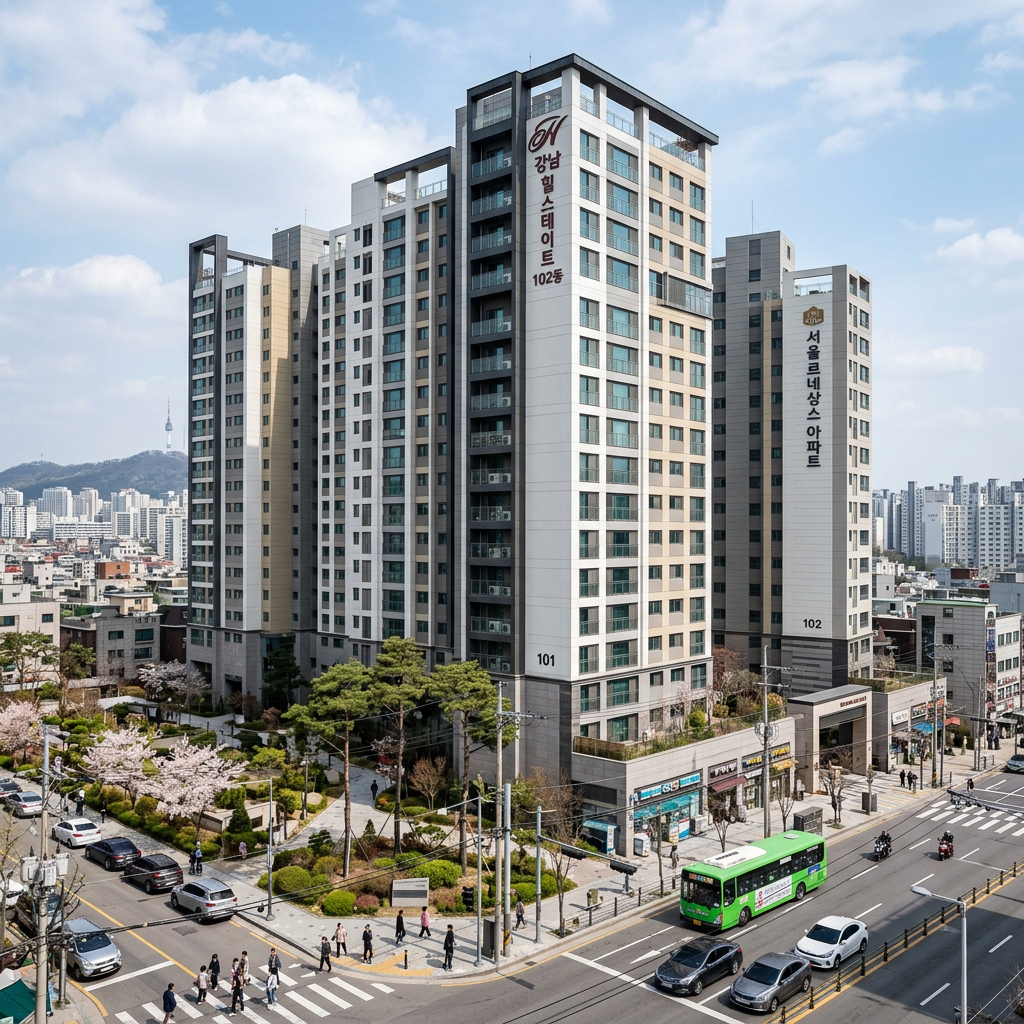
Why This Question Comes Up So Often for Companies in Korea
Most foreign-invested companies in Korea run into this issue the same way: a relocating executive or engineer needs housing, and someone in finance asks whether the company should simply buy the unit outright instead of paying monthly rent for years. On paper, corporate ownership sounds efficient — one asset, one long-term solution, no landlord disputes.
In practice, Korean tax law treats corporate housing ownership very differently from individual ownership, and the gap has widened in recent years. A company that skips this comparison can end up with a tax bill several times higher than expected, simply because nobody checked which name should be on the contract before signing. That’s exactly why weighing a corporate vs. individual property purchase in Korea early, rather than after the fact, matters so much.
Buying Under Your Own Name: The Individual Route
When a foreign employee or executive buys a home in their own name, the purchase generally follows the same path any foreign individual buyer follows in Korea:
- Acquisition tax at the standard individual rate, which varies by property price and the number of homes already owned by that person.
- Comprehensive real estate tax (종합부동산세, an annual national tax on the total value of real estate a person owns) only applies above a personal exemption threshold, so a single home usually stays well under it.
- If the property sits inside one of the foreign land acquisition permission zones that took effect in Seoul’s 25 districts, 23 Gyeonggi cities, and 7 Incheon districts starting February 2026, the individual buyer — not the company — must apply for permission and meet the two-year residency requirement personally.
- Capital gains tax applies when the individual eventually sells, calculated on their personal profile (length of ownership, number of homes, etc.).
This route works well when the home is genuinely meant to be that one person’s residence, and the company doesn’t need to hold the asset on its own books.
Buying Under Your Company’s Name: The Corporate Route
Buying under the corporate name means the company itself appears on the property registry — not the employee living there. This is where the numbers shift the most.
Under Korea’s Local Tax Act (지방세법 제13조의2), a corporation that acquires a house is taxed at the standard rate plus an additional 400% of the heavy-taxation base rate. In practice, this results in a flat acquisition tax rate around 12% for most corporate housing purchases — regardless of the price or how many properties the company already owns.
The comprehensive real estate tax gap is just as significant. For corporate taxpayers, a flat rate of 2.7% applies when the company owns two or fewer houses, and 5% applies at three or more — and corporations do not receive the basic deduction that individual taxpayers get when calculating this tax. That last point matters: an individual’s first home is usually shielded by a personal exemption, while a company’s very first house is taxed from the first won of value.
On top of that, if the property is in one of the 2026 foreign land acquisition permission zones, the company — as the legal owner — is the one that must file the permission application, disclose visa status information where required, and satisfy the occupancy obligations tied to the property.
Corporate vs. Individual Property Purchase in Korea: Tax and Compliance At a Glance
| Item | Individual Ownership | Corporate Ownership |
|---|---|---|
| Acquisition tax | Standard rate, tiered by price/number of homes | Flat ~12% surtax rate on most housing purchases |
| Comprehensive real estate tax | Personal exemption applies; usually low for one home | 2.7%–5% flat rate; no basic deduction |
| Permission-zone filing (2026) | Filed personally by the buyer/occupant | Filed by the company as legal owner |
| Occupancy requirement | Tied to the individual’s residency | Tied to the corporate entity, harder to satisfy loosely |
| Best fit for | A single long-term resident, personal use | Multi-unit portfolios, corporate HQ assets, resale-focused holding |
Note: acquisition tax and comprehensive real estate tax rules change frequently and depend on the property’s exact location, price, and the company’s existing holdings. Always confirm the current figures with the National Tax Service (국세청) or a licensed tax advisor before finalizing a purchase.
When Does the Corporate Route Actually Make Sense?
Given the tax gap above, why would any company still buy under its own name? A few situations come up regularly in practice:
- Multiple relocating employees over time. If the company expects to rotate several expatriate staff through the same unit over the years, corporate ownership avoids re-registering the property under a new individual’s name every time someone leaves.
- The property also serves as office or representative space, not purely residential housing — different tax treatment can apply when the space has a genuine business-use component.
- Long-term asset strategy, where the company plans to hold Korean real estate as part of its regional balance sheet regardless of staffing changes.
- Liability separation, where the company prefers the property to sit inside the corporate entity rather than tie it to any one employee’s personal finances.
Quick Decision Checklist
- Is this home for one specific employee, or a rotating pool of staff?
- Have you compared the ~12% corporate acquisition tax against the individual rate for this specific price point?
- Is the property located inside a 2026 foreign land acquisition permission zone?
- Does your company already own other Korean real estate that would push you into the 5% corporate comprehensive tax bracket?
- Has a Korean tax advisor confirmed the current rates for your specific case?
- Have you compared this against renting under Korea’s jeonse, wolse, or banjeonse systems as a middle-ground option?
If most of these point toward “individual, one employee, one home,” the personal route is usually simpler and cheaper. If they point toward “recurring need, multi-year asset, business use,” the corporate route may still make sense despite the higher tax load. If you’re also weighing whether to buy at all, our guide on buying vs. renting an officetel in Korea covers a related decision worth reading alongside this one. Either way, weighing a corporate vs. individual property purchase in Korea before you sign anything can save you from an expensive correction later.
FAQ: Corporate Property Purchase in Korea
Q. Can a foreign-invested company in Korea legally buy a house under its own name?
A. Yes, a foreign-invested corporation registered in Korea can generally purchase real estate, but it must still comply with the same foreign land acquisition reporting and, where applicable, the 2026 permission-zone rules.
Q. Is the corporate acquisition tax always around 12%?
A. In most housing purchases by a corporation, yes, due to the heavy-taxation surtax — but exceptions and reductions can apply depending on the company’s history and the property type, so this should always be confirmed with a tax professional.
Q. Does corporate ownership avoid the two-year occupancy requirement in permission zones?
A. No. The occupancy and reporting obligations attach to the property and its registered owner, so a corporate owner must still meet them, just under the company’s name instead of an individual’s.
Q. Is renting always cheaper than buying for a single relocating employee?
A. Not necessarily — it depends on the length of the assignment, local rental system (jeonse, wolse, or banjeonse), and how long the company expects to need housing in that location. A cost comparison over the expected assignment length usually settles this quickly.
Q. Who should we talk to before deciding?
A. A Korean tax advisor for the exact rates, and an immigration/real estate consultant for the permission-zone and registration steps — ideally before you sign anything, not after.
Conclusion
Putting a Korean home purchase under your company’s name isn’t wrong — but it comes with a materially heavier tax load and compliance burden than most teams expect going in. If the housing need is really about one relocating employee, personal ownership is usually the simpler, cheaper path; if it’s a recurring, multi-year corporate asset, the higher tax cost may still be worth the stability. Either way, this is not a decision to make from a spreadsheet alone.
Not sure which route fits your company’s situation? Talk to AMP Interpro’s Relocation & Real Estate team before you sign — we help foreign-invested companies structure Korean property decisions correctly the first time.





2 Comments