
Discover South Korea’s Hidden Natural Wonder
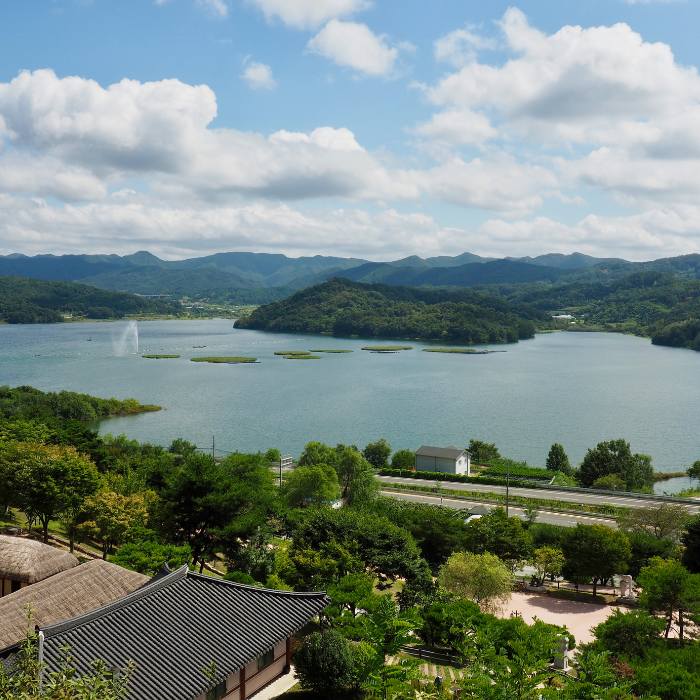
Nestled in the serene countryside of Chungcheongbuk-do Province, the Busodamak South Korea floating mountain is one of the country’s most magnificent yet underrated natural attractions. This extraordinary geological formation (부소담악), whose name literally translates to “a mountain floating on a lake,” offers visitors a truly unique landscape that changes dramatically with each season.
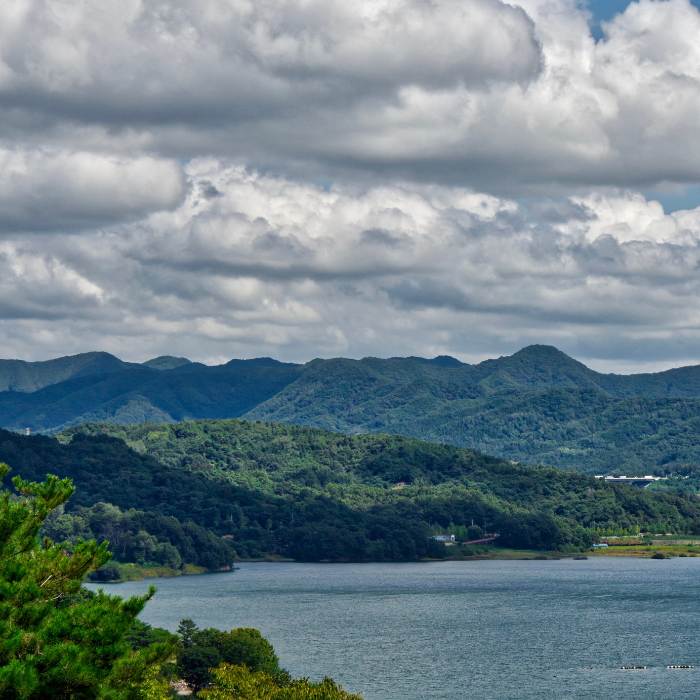
Located in Okcheon County, Busodamak features a spectacular 700-meter-long cliff that rises dramatically from the waters of Daecheong Lake, creating the breathtaking illusion of a mountain floating on water. This distinctive formation has earned it the nickname “The Dragon’s Ridge” among international travelers who are captivated by its resemblance to a mythical dragon gliding across the lake’s surface.

Source: AsiaE / Photo by Jo Yong-jun, Travel Reporter
Link: https://www.asiae.co.kr/article/2022041213453965915
Why Busodamak Should Be on Your South Korea Bucket List
A Landscape of Legendary Beauty
The Busodamak South Korea floating mountain’s striking beauty has been recognized for centuries. During the Joseon Dynasty, the celebrated scholar Song Si-yeol was so moved by its splendor that he named it “Small Geumgang” (작은 금강), comparing it to the famous Geumgang Mountains, one of Korea’s most treasured natural sites.
This perfect harmony between rugged cliffs and tranquil lake waters is what makes the Busodamak South Korea floating mountain such an ever-changing panorama, one that keeps photographers returning throughout the year:
Seasonal Splendors
Spring (March-May): As the landscape awakens from winter, cherry blossoms dot the cliffs with delicate pink and white blooms. The fresh green foliage emerging against the rocky backdrop creates a vibrant contrast that symbolizes renewal. For more seasonal blooms across the country, see our guide to South Korea’s 2025 Garden Festivals.
Summer (June-August): Lush, verdant vegetation covers the slopes, while the clear blue waters of Daecheong Lake reflect the deep blue summer sky. This is the perfect season for boat tours, when the cool breeze off the water offers relief from summer heat.
Autumn (September-November): Perhaps the most spectacular time to visit, fall transforms Busodamak into a canvas of red, orange, and gold. The autumn foliage against the gray cliffs, reflected in the still waters below, creates a natural masterpiece that draws visitors from across Korea.
Winter (December-February): A different kind of beauty emerges when snow blankets the cliffs. The stark contrast between the white snow, dark rocks, and steely water creates a serene, almost mystical atmosphere rarely experienced by international visitors.
The Fascinating History Behind the Landscape
What makes Busodamak particularly interesting is that its current appearance is relatively recent. Before 1980, this area was home to several thriving villages, including Buso and Chudong. However, the construction of Daecheong Dam led to the creation of Daecheong Lake, submerging these communities and forcing residents to relocate to higher ground.
This transformation of the landscape – where human settlements once stood – created the unique water-and-mountain scenery we see today. The submerged villages add a layer of poignancy to the area’s beauty, reminding us of the human stories beneath the surface. Today, the Busodamak South Korea floating mountain stands as a striking reminder of nature reclaiming a once-inhabited valley.
Experiencing Busodamak: What to Do and See
Boat Tours: The Ultimate Busodamak Experience
Without question, the most immersive way to experience the Busodamak South Korea floating mountain is from the water. Regular boat tours operate throughout the main tourist season (March through November), offering:
- Unparalleled views of the imposing cliff faces from below
- Informative commentary from guides who explain the geological features and share local legends
- Opportunities to witness wildlife including various bird species and, if you’re lucky, otters that inhabit the lake shores
- The perfect vantage point for photographing the reflection of the cliffs in the still morning waters
Boat tours typically last 30-40 minutes and depart regularly from the main dock. Tickets can be purchased on-site (₩12,000 for adults, ₩8,000 for children), though booking ahead is recommended during peak autumn weekends.
Land-Based Exploration
If you prefer keeping your feet on solid ground, Busodamak offers several excellent options:
Hiking Trails
A network of well-maintained trails allows visitors to explore the area from different perspectives:
- Panorama Trail: A moderate 3.5 km loop that takes about 1.5 hours to complete, offering spectacular views from multiple angles
- Lakeside Path: An easier 2 km walk suitable for all ages and fitness levels
- Summit Trail: For more adventurous hikers, this challenging 5 km trail rewards with breathtaking vistas from the top of the ridge
Chusojeong Pavilion
This traditional Korean pavilion offers perhaps the most famous view of Busodamak. Perched on a strategic overlook, it provides the perfect frame for the Busodamak South Korea floating mountain effect. The pavilion itself is a beautiful example of traditional Korean architecture, with its distinctive curved roof and intricate wooden details.
Many visitors bring a picnic to enjoy at the pavilion while taking in the magnificent views. Information boards in Korean, English, Chinese, and Japanese explain the historical and cultural significance of both the pavilion and the landscape.
Practical Information for Visitors
Best Times to Visit
- Peak Beauty: Mid-October to early November (autumn colors) and early April (cherry blossoms)
- Fewer Crowds: Weekdays any time of year, or winter months for a more solitary experience
- Best Photography: Early morning (6-8 AM) for still waters and perfect reflections, or late afternoon for golden hour lighting on the cliffs
How to Get There
From Seoul:
- By car: Take the Gyeongbu Expressway toward Daejeon, then transfer to the Dangjin-Yeongdeok Expressway. The drive takes approximately 2 hours.
- By public transportation: Take an express bus from Seoul’s Dong Seoul Bus Terminal to Okcheon (약 2 hours), then a local bus or taxi to Busodamak (30 minutes).
From Daejeon:
- By car: 45-minute drive via National Route 4
- By public transportation: Regular buses connect Daejeon to Okcheon, followed by a local bus or taxi to Busodamak
Nearby Attractions
Make the most of your trip by combining Busodamak with other notable destinations in the area:
- Cheongnamdae: The former presidential villa, now open to the public, offering beautiful gardens and lake views
- Gosu Cave: One of Korea’s most impressive limestone caves, located just 40 minutes from Busodamak
- Songnisan National Park: Famous for its rocky peaks and Beopjusa Temple with its impressive Buddha statue
Where to Stay
While Busodamak itself doesn’t have luxury accommodations, several options are available nearby:
- Okcheon Hanok Village: Experience traditional Korean housing with modern comforts
- Daecheong Lake Resort: Mid-range resort offering lake views and water activities
- Chungju City Hotels: For those preferring urban amenities, Chungju (40 minutes away) offers various international-standard hotels
Local Cuisine to Try
The Chungcheong region is known for several specialty dishes that visitors should sample:
- Chungju Jipbap: Home-style meals featuring locally grown vegetables and freshwater fish
- Okcheon Saengseon-gui: Grilled freshwater fish caught from Daecheong Lake
- Dotorimuk: Acorn jelly salad, a regional specialty with a unique texture
- Makgeolli: Traditional Korean rice wine, particularly refreshing after a day of hiking
Visitor Etiquette and Tips
- Busodamak is a protected natural area; stay on designated paths and take all trash with you
- Wear comfortable walking shoes even if you’re primarily taking the boat tour
- The sun reflects off the water, so bring sunscreen even on cloudy days
- Cell phone reception can be spotty in some areas; download maps in advance
- While English signage is available, having a basic translation app can be helpful for communication with local vendors
Final Thoughts
Having explored Busodamak myself, I can honestly say it’s one of the most captivating natural landmarks I’ve come across in South Korea. The floating mountain effect, that perfect harmony between dramatic geological features and peaceful waters, is something that has stayed with me long after my visit. Unlike the crowded tourist attractions of Seoul or Jeju Island, I found this hidden gem to be a far more authentic experience of Korean natural beauty, local culture, and tranquility.
What I love most about Busodamak is that it never looks the same twice. Depending on when you go, Korea’s four distinct seasons transform this place completely: soft cherry blossoms and fresh greenery in spring, lush deep green in summer, brilliant red and gold foliage in autumn, and a quiet, snow-dusted stillness in winter. There’s also a hiking route that lets you walk right through the landscape and feel the nature up close, and if you ever get the chance, I really recommend walking it yourself rather than just viewing it from a distance.
One more tip from my own experience: even when I was deep in the mountains, my phone signal never cut out, which is true almost everywhere in South Korea. So don’t hesitate to check your location in real time and let Google Maps or Kakao Map guide you along the trail. It made getting around so much easier for me, and I’m sure it will for you too.
Whether you’re chasing the perfect sunrise photo, listening to a local guide explain how this landscape came to be, or simply enjoying the peaceful atmosphere away from the city, I can say from experience that Busodamak makes for an unforgettable addition to any Korean itinerary. This “floating mountain” may not be on every traveler’s radar yet, but I promise that making the journey here rewards you with one of South Korea’s most spectacular natural wonders.
Have you visited Busodamak, or are you planning your own trip? I’d love to hear about your experience, or answer any questions, in the comments below!





One Comment