
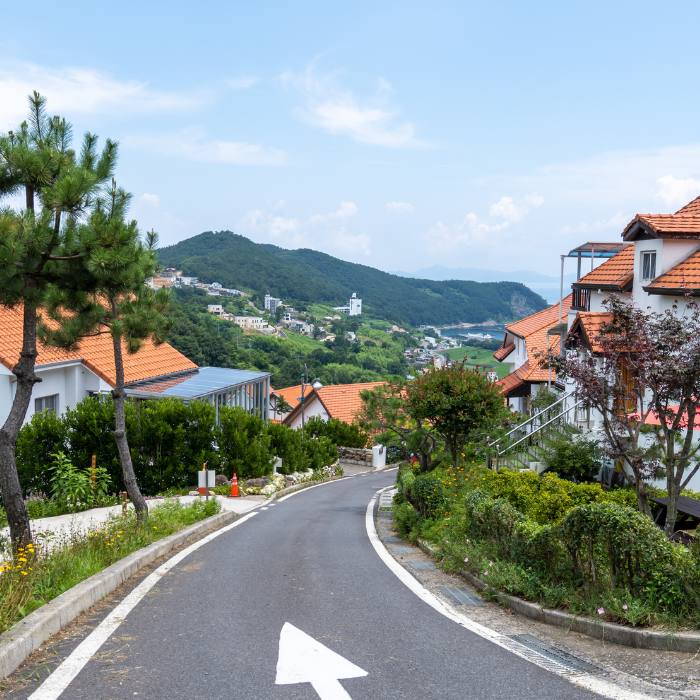
The moment I stepped off the bus and saw those orange rooftops cascading down the hillside toward the sea, I knew I’d stumbled onto something special. I’d heard about Namhae German Village South Korea for years, but nothing quite prepared me for how surreal it felt to find a slice of Germany tucked into the southern coast of Gyeongsangnam-do Province.

Photo Source: Website of the Namhae German Village Beer Festival
A Fascinating Cultural History
Before I arrived, I did a bit of reading, and the village’s backstory moved me more than I expected. In the 1960s and 1970s, thousands of Korean miners and nurses left home for West Germany as part of an economic cooperation program. Talking with a few locals during my visit, I learned that many of these workers eventually wanted to come home, but they didn’t want to leave their German life entirely behind.
The Namhae County government built this village so they could do both. Standing there, I could really feel that it wasn’t just a tourist attraction I was walking through, but a monument to people’s real, lived history.
What Makes Namhae German Village Special?
European Architecture in an Asian Setting
I counted more than a few of the reported 40-plus German-style houses as I wandered, and each one felt carefully considered, from the vivid orange roofs to the crisp white walls and tidy gardens. Someone at a local shop told me many of the materials were actually shipped in from Germany, and honestly, I believed it.
Walking those winding streets, with the hillside dropping away to Namhae’s blue water below, I kept stopping just to take in the view, it’s a strange, wonderful clash of European design and Korean coastline.
Cultural Immersion Experience
This is where the trip really won me over. I ducked into a few restaurants and bakeries run by former Korean-German expatriates, and I ended up having bratwurst, a soft pretzel, and a proper schnitzel, all washed down with an authentic German beer.
Later, I spent a quiet hour inside the “Padok Museum,” named for the Korean term for those who were sent to work in Germany. Reading the personal letters and looking at old photographs on display, I found myself genuinely moved by what these miners and nurses gave up for their families.
Breathtaking Natural Surroundings
I’ll admit, I lingered on the hillside longer than planned just to soak in the view over Mulgeon Harbor and the coastal forest beyond. Between the German-style buildings in the foreground and the Korean coastline stretching out behind them, I couldn’t stop taking photos, it’s one of the more photogenic spots I’ve come across in Korea.

Must-Do Activities in Namhae German Village
Savor Authentic German Cuisine
I made a point of trying the local sausages, breads, and pastries, all made to traditional German recipes, and paired them with a German-style beer at one of the village’s beer houses. It was one of my favorite parts of the day.
Explore the Village by Foot
I spent a good chunk of my visit just strolling, no real destination, just wandering the charming streets, popping into artisan shops, and snapping photos of the colorful houses against the southern coastline. Every corner seemed to offer a slightly different view.
Visit the Padok Exhibition Hall
I’m glad I set aside time for this museum. Learning about the journey of the Korean miners and nurses who worked in Germany gave real context to everything else I saw in the village, and it left me with a much deeper appreciation for what they built.
Enjoy the View from the Observatory
I climbed up to the village observatory late in the afternoon, and I’m so glad I timed it that way. Watching the sunset light up the orange rooftops from above was easily one of the most magical moments of my trip.
Experience Oktoberfest Korean-Style
I happened to visit during early October and caught Namhae’s own take on Oktoberfest, and it turned the whole village into a celebration.
Authentic German Beer and Food
I sampled several traditional German beers and sausages from the local vendors, and the beer garden atmosphere they’d created felt surprisingly authentic.
Cultural Parades and Performances
I watched the daily parade of participants in traditional German attire, and later caught a lively set of European music and dance performances.
Hands-On Cultural Experiences
I signed up for a beer brewing workshop, and it gave me a whole new appreciation for the craft behind what I’d been drinking all day.
Family-Friendly Activities
I noticed plenty of families around too, with kids enjoying games and activities set up just for them throughout the festival.
Practical Travel Information
Getting There
I made the roughly 4-hour drive from Seoul, though I met other travelers who’d taken the express bus to Namhae Terminal and transferred to a local bus to reach the village.
Best Time to Visit
I chose to visit in the fall, and I’d recommend it, the weather was pleasant and I got to catch the Oktoberfest celebrations happening in early October. I imagine spring (April-May) would be just as lovely.
Accommodation Options
I stayed overnight at the “Namhae German Village Hotel,” and it made a real difference to my experience. Since many of the houses have been converted into pension-style lodgings, I got to feel what it’s like to actually live in the German Village rather than just pass through for a day.
Why Namhae German Village Deserves a Spot on Your Korea Itinerary
Looking back on my visit, I can say this place offered me something genuinely different from every other Korean destination I’ve explored. The blend of German and Korean influences created an atmosphere I haven’t found anywhere else in Asia. Whether you’re drawn to cultural history, architecture, food, or just want a distinctive slice of Korea’s multicultural heritage, I left feeling like I’d had an unforgettable experience.
For me, the village captured something bigger, how Korea has stayed connected to the wider world while still building something entirely its own. Learning about the Koreans who lived and worked abroad, and seeing how Namhae honored their experiences, made me feel like I’d walked through a living bridge between East and West.
I’d tell any traveler planning a Korea trip to add Namhae German Village to their list, it’s one of the most distinctive and photogenic places I’ve visited in the country. If you want more details before you go, I’d suggest checking the Namhae Tour Guide.


What a fascinating piece of history! I never realized that the Namhae German Village was created to welcome returning Koreans from Germany. It’s amazing how architecture can tell a story.
The way Namhae German Village brings together German architecture and Korean coastal beauty is truly fascinating. It’s incredible to think how such a unique cultural connection has been preserved and celebrated in this peaceful setting.
The backstory of the Korean miners and nurses returning from Germany adds such a meaningful layer to the village’s charm—it’s more than a tourist spot; it’s a tribute to shared history. It’s amazing how architecture can carry so much emotional and cultural weight.