Have you ever sat across the table from a school admissions officer in Korea, only to realize halfway through the conversation that you’re not even sure which category of school you’re talking to? You’re not alone. Nearly every family we work with at AMP Interpro arrives in Korea assuming “international school” is one single option, and it’s usually the first misconception we have to clear up.
In Korea, the school choice for foreign families actually splits three ways: foreign schools, international schools, and local public or private schools, each with its own eligibility rules, tuition range, and curriculum. Getting this distinction right before you apply saves families months of wasted paperwork, so this guide breaks down exactly how the three compare and how to figure out which path fits your family.
Consultant’s Note: This is the very first thing I clarify when I sit down with a new family, because until we know which of the three categories applies, every question about tuition or curriculum is premature. In my day-to-day work, weighing an international school vs local school Korea (or a foreign school altogether) is the decision that shapes everything else.
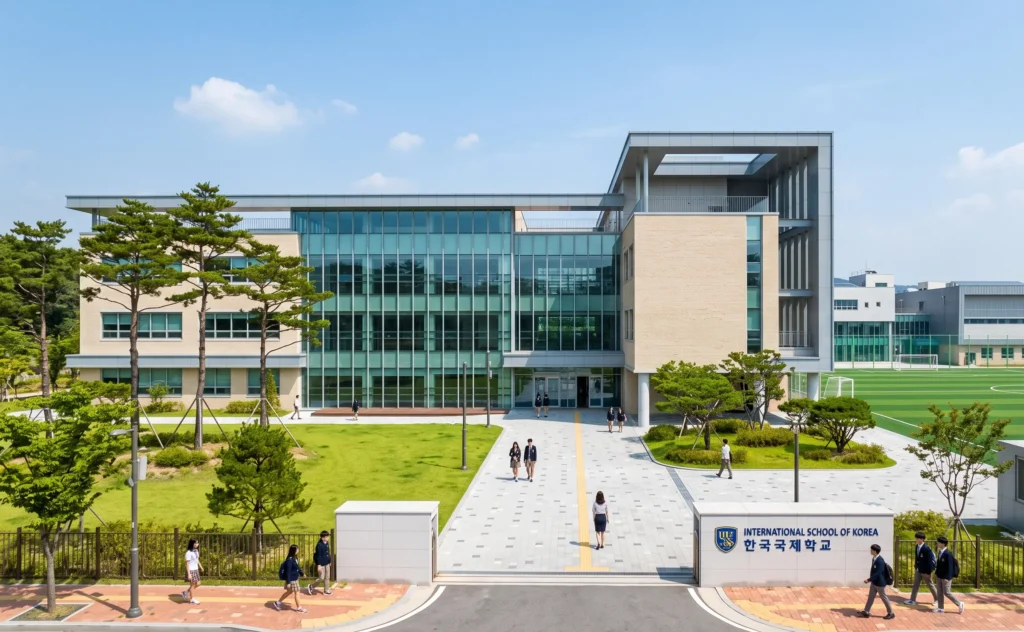
Table of Contents
- Three Paths, Not One: Why “International School” Is the Wrong Starting Question
- Foreign Schools: Eligibility, Curriculum, and Who Actually Qualifies
- International Schools: A Different Legal Category, A Different Door In
- Local Public and Private Schools: The Option Most Families Overlook
- Comparing the Three Paths Side by Side
- How We Help Families Decide: A Real Case Example
- A Practical Decision Checklist
- FAQ
Three Paths, Not One: Why “International School” Is the Wrong Starting Question
When families ask us “should we send our child to international school,” we usually have to pause and ask a question back: do you mean a foreign school, an international school, or are you actually open to a local school with English-language support? These terms get used interchangeably in casual conversation, but in Korea they refer to three legally distinct categories, each governed by different regulations and each with its own admissions gate.
This distinction matters enormously in practice. We’ve seen families spend weeks preparing an application for a foreign school, only to discover partway through that they don’t meet the residency requirement — a detail that would have redirected their entire search toward international or local options if it had surfaced earlier.
Foreign Schools: Eligibility, Curriculum, and Who Actually Qualifies
Foreign schools in Korea — places like Seoul Foreign School or Korea Foreign School — operate under Korea’s regulations for the establishment and operation of schools for foreigners. In practice, this generally means the student or at least one parent needs a documented history of living abroad for a set period, since these schools were established to serve genuinely internationally mobile families rather than to function as a general private-school alternative for Korean nationals.
Curriculum at foreign schools typically follows an established international framework — the IB Diploma Programme, American Advanced Placement courses, or a national curriculum tied to the school’s founding country. Instruction is almost always in English, and these schools tend to carry strong accreditation from bodies like the Western Association of Schools and Colleges or the Council of International Schools, which matters if your family expects to relocate again and needs credits that transfer cleanly.
The residency-history requirement is the detail I flag earliest with every family I work with, because it’s the single most common reason a foreign school application gets rejected before it ever reaches a review committee. If your family has spent your career moving between postings and this is your first stint in Korea, you’re very likely to qualify. If your child was born and raised in Korea to a foreign parent who has lived here long-term, eligibility becomes far less certain and needs to be confirmed directly with the specific school.
Consultant’s Note: I’ve had more than one family come to me convinced their foreign-born, long-term-resident child would sail through a foreign school application, only for the residency history to fall short. It’s not a rejection of the family — it’s simply the wrong door. That’s exactly why I always check this box first, before we even talk about curriculum.
International Schools: A Different Legal Category, A Different Door In
International schools, most notably the schools operating within Jeju’s designated international school district under the Jeju Free International City Development Center, sit under a separate regulatory framework from foreign schools. This distinction opens a door that foreign schools generally keep closed: some international schools permit conditional enrollment for Korean national students, not only foreign nationals, provided specific conditions set by each school are met.
This makes international schools a meaningful option for a slightly different group of families than foreign schools serve: mixed-nationality households, Korean families who have lived abroad and want to keep their children on an English-medium academic track, and foreign families who simply don’t meet a foreign school’s overseas-residency requirement. Curriculum tends to mirror foreign schools closely — IB, American, or British frameworks are common — but always verify accreditation and university-transfer outcomes directly with the specific school, since standards vary between institutions even within the same designated district.
Local Public and Private Schools: The Option Most Families Overlook
Local schools rarely make it onto a relocating family’s shortlist in the first conversation, and in my experience that’s often a missed opportunity rather than a deliberate decision. Korean public schools follow the national curriculum, instruction is primarily in Korean, and tuition for public school is dramatically lower than either foreign or international schools — often close to free beyond basic fees.
The real question for local schools isn’t cost, it’s language support. Many districts now offer initial-adaptation Korean-language classes for newly arrived students through multicultural family support centers, which can bridge the gap for a child with little or no Korean. Families planning a longer-term stay in Korea, or who want their children to build genuine fluency and social integration, often find the local school path more valuable long-term than a foreign or international school bubble — even if the first semester is harder.
Consultant’s Note: The families I’ve seen thrive at local schools are usually the ones who go in expecting a hard first semester rather than an easy one. When I set that expectation up front, the adjustment period feels manageable instead of alarming — and by the second year, most of these kids are more fluent and better integrated than their peers at foreign or international schools.
Comparing the Three Paths Side by Side: International School vs Local School Korea
| Factor | Foreign School | International School (Jeju) | Local Public/Private School |
|---|---|---|---|
| Who typically qualifies | Students/parents with documented overseas-residency history | Foreign nationals; Korean nationals may qualify conditionally | All residents; no residency history required |
| Instruction language | English (usually) | English (usually) | Korean, with adaptation support available |
| Curriculum | IB / AP / home-country curriculum | IB / AP / British curriculum (varies by school) | Korean national curriculum |
| Relative tuition | Highest | High | Lowest |
| Best fit for | Internationally mobile families planning further relocation | Mixed-nationality households, families not eligible for foreign schools | Long-term residents prioritizing integration and Korean fluency |
How I Help Families Decide: A Real Case Example
A family I worked with last year had relocated to Seoul for a multi-year corporate assignment, with two children who had previously attended school in Singapore and Germany. Their first instinct was to apply directly to a well-known foreign school, since that was the pattern from their prior postings. When I reviewed their documentation with them, their overseas-residency history clearly qualified them, and the foreign school route made sense.
A second family in a very similar situation — one Korean parent, one foreign parent, both having lived in Korea for several years before this conversation — assumed the same foreign school path was open to them. It wasn’t; their residency profile didn’t meet the requirement. Once I walked them through the international school option and a strong local school with an established adaptation program, they chose the local school, largely because they wanted their children building close relationships with Korean peers rather than staying inside an expatriate bubble. Both families were satisfied with their outcome, precisely because the decision matched their actual circumstances rather than a default assumption.
Consultant’s Note: These two families had nearly identical résumés on paper, but completely different eligibility outcomes. That’s the pattern I see again and again — I never assume a family’s path based on what worked for someone else in a similar-sounding situation. I always start from their specific residency history and their goals for their kids, then work backward to the right school category.
A Practical Decision Checklist
- Confirm your overseas-residency history first. This single factor determines foreign school eligibility before anything else matters.
- Clarify your family’s nationality mix. Mixed-nationality or Korean-national families should look closely at international schools rather than assuming foreign schools are the only English-medium option.
- Decide how long you expect to stay in Korea. A short-term posting favors foreign or international schools; a longer-term move often favors local schools for integration.
- Check accreditation directly with each school. Don’t assume all foreign or international schools carry the same standing — confirm with the specific institution.
- Ask about waiting lists early. Popular foreign and international schools can have limited seats per grade, so timing your application matters as much as eligibility.
If you’re just starting to map out how Korea’s education system fits together before narrowing down a specific school, our guide to Korea’s grade-placement system is a useful first stop, and our upcoming piece on public school enrollment steps for foreign children will cover the local-school path in more depth.
Frequently Asked Questions
What’s the actual legal difference between a foreign school and an international school in Korea?
Foreign schools operate under Korea’s regulations for schools serving foreign nationals, generally requiring documented overseas-residency history. International schools, such as those in Jeju’s designated district, fall under a separate framework that can permit conditional enrollment for Korean nationals as well.
Can a Korean citizen attend a foreign school in Korea?
Generally, foreign schools require the student or a parent to have a documented history of living abroad, so eligibility for Korean citizens without that history is uncommon. Always confirm directly with the specific school, since exact requirements can vary.
Is a local Korean school a realistic option for a foreign child with no Korean language ability?
Yes, particularly with the initial-adaptation Korean-language support many districts offer through multicultural family support centers. It’s a bigger adjustment than an English-medium school, but many families find it pays off in long-term integration.
Do foreign and international schools in Korea accept mid-year transfers?
Policies vary significantly by school, so this needs to be confirmed directly with each institution’s admissions office rather than assumed.
How far in advance should we apply to a foreign or international school?
Popular schools can have limited seats and waiting lists per grade level, so starting the process several months before your intended enrollment date is generally advisable, though timelines vary by school and grade.
Final Thoughts
The right school choice in Korea isn’t about picking the most prestigious-sounding option, it’s about matching your family’s actual residency history, nationality mix, and length of stay to the path that’s genuinely open to you. Foreign schools, international schools, and local schools each serve a real need, and the families who end up happiest with their choice are usually the ones who understood the distinction before they started applying, not after.
Consultant’s Note: If there’s one thing I want every relocating parent to take from this guide, it’s that “which school is best” is the wrong first question. The right first question is “which of these three paths is actually open to my family?” Once I know that, narrowing down an actual school gets much easier.
If you’d like help mapping your family’s specific situation against these three paths, or a second opinion before you submit an application, AMP Interpro’s Relocation & Real Estate team can walk through it with you — get in touch here.





One Comment