
Have you ever stood in front of a district education office in Korea holding a folder of documents, only to be told you’re missing one you’d never even heard of? It happens to almost every family we’ve guided through this process at AMP Interpro. Korean public school enrollment for a foreign child isn’t complicated once you know the sequence, but the sequence itself is rarely explained clearly to newcomers, and a single missing document can cost a family weeks.
This guide walks through the actual Korean public school enrollment process step by step, from confirming your child’s legal status to using the Korean-language support classes many districts now offer newly arrived students. If you’re still deciding between a public school and an international or foreign school, our companion guide on comparing school types in Korea is worth reading first; this piece assumes you’ve already chosen the public school path.
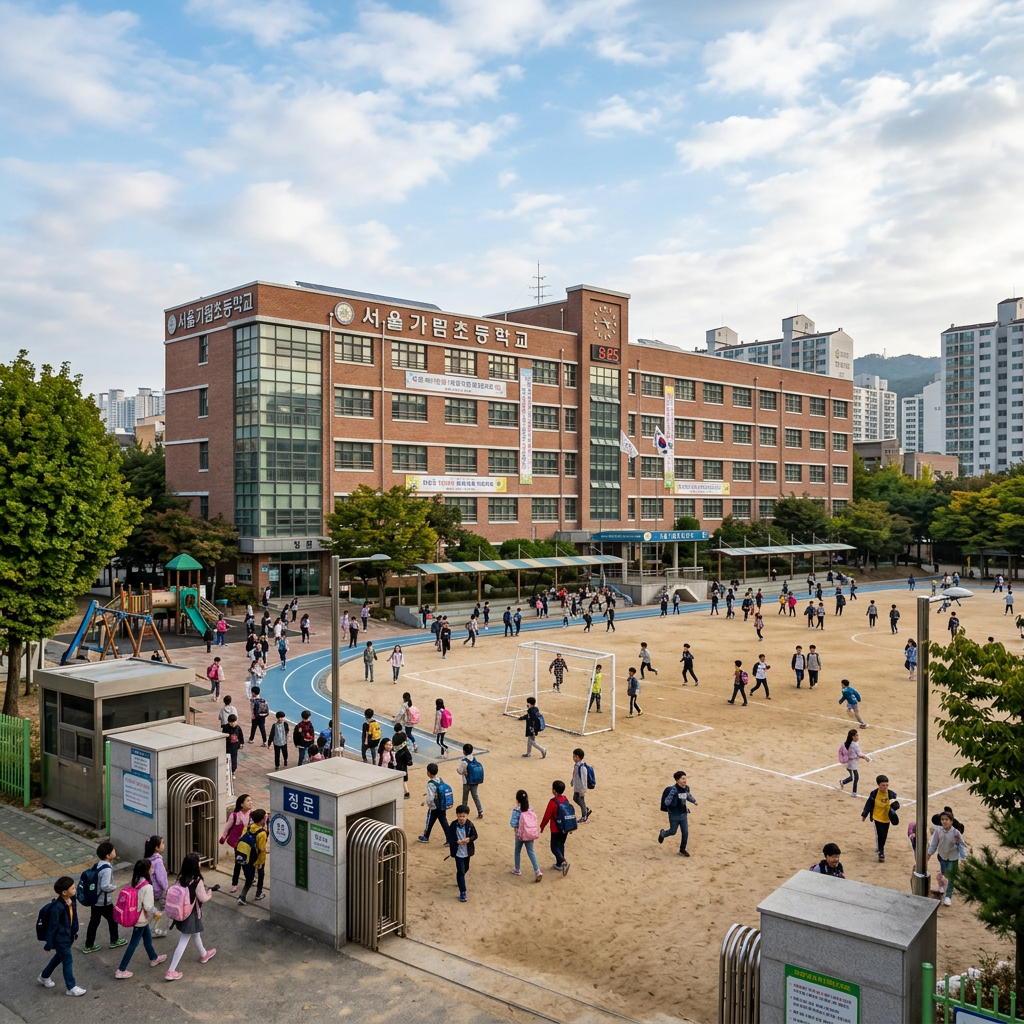
Table of Contents
- Step 1: Confirm Your Child’s Legal Status to Enroll
- Step 2: Determine Which School Your Address Assigns You To
- Step 3: Gather the Required Documents
- Step 4: Visit the District Education Office (교육지원청)
- Step 5: Use Korean-Language Adaptation Support
- A Real Enrollment Case: What Actually Went Wrong
- Enrollment Checklist at a Glance
- FAQ
Step 1: Confirm Your Child’s Legal Status to Enroll
Before anything else, confirm your family’s residency status in Korea supports school enrollment. In practice, this means having your Alien Registration Card (ARC) or the appropriate visa documentation in hand, since the school will ask for it as part of the intake process. Families on longer-term visas rarely run into issues here, but we always tell clients to confirm this first, since it’s the one step that can genuinely stop the process if it’s overlooked.
If your visa status is still being finalized, or you’re waiting on an ARC appointment, it’s worth calling the district office ahead of time to ask whether provisional enrollment is possible while your documentation catches up. Policies here can vary by district, so a phone call before you show up in person saves a wasted trip.
Step 2: Determine Which School Your Address Assigns You To
Korean public schools generally operate on a residence-based assignment system, meaning the elementary or middle school your child attends is determined by your registered address rather than a school of your choosing. This is a significant shift for families coming from school-choice systems, and it’s worth factoring into your housing search rather than discovering it after you’ve already signed a lease.
Your local 주민센터 (community center) or the district office of education can confirm exactly which school your address feeds into. If you haven’t finalized housing yet, we generally recommend confirming the school assignment for a neighborhood before signing a lease, particularly if a specific school’s Korean-language support program was part of your decision.
Step 3: Gather the Required Documents
Document requirements can vary slightly by district, but the core set we see requested consistently includes proof of residence (a lease or ARC address), the child’s passport, the family’s ARC or visa documentation, and some form of prior school record, such as a report card or transcript from the previous school. If any of these documents are in a language other than Korean or English, an official translation is often required, and in some cases notarization as well.
Vaccination records are another item that catches families off guard. Korean schools generally expect an immunization record aligned with the domestic schedule, and if your child’s vaccination history doesn’t map cleanly onto Korea’s requirements, the school nurse or district office can advise on what additional documentation or catch-up vaccinations may be needed.
One detail that trips up almost every family we work with: prior school records from abroad often need more than a simple translation. Some districts want a brief explanation of the grading scale used at the previous school, since a “B+” or a percentage score doesn’t automatically map onto Korea’s system. We generally recommend requesting a short cover letter from the previous school, alongside the transcript itself, summarizing the grading scale in plain language. This single addition has saved several of our clients an extra round of correspondence with their former school after arriving in Korea.
Step 4: Visit the District Education Office (교육지원청)
Once your documents are ready, the enrollment conversation typically starts at your local 교육지원청 (District Office of Education) rather than the school itself, especially for first-time enrollment of a foreign student. This office confirms your school assignment, reviews your documentation, and issues the referral that lets the school itself proceed with registration.
In our experience, bringing a Korean-speaking companion to this appointment, even if it’s not a professional interpreter, meaningfully smooths the process. Staff at these offices are accustomed to working with foreign families, but the paperwork itself is entirely in Korean, and having someone to clarify terminology on the spot avoids a second trip for a missing signature or an unclear form.
Step 5: Use Korean-Language Adaptation Support
If your child has little or no Korean, ask specifically about the 다문화예비학교 (multicultural preparatory school) or initial-adaptation Korean-language classes available through your regional multicultural family support center. These programs are designed to bridge new students into the regular classroom over a period of weeks to months, rather than dropping them directly into full Korean-language instruction on day one.
Availability and program length vary by region, and larger cities like Seoul, Busan, and Incheon generally have more established options than smaller municipalities. If you have any flexibility in where you settle, checking which districts have an active adaptation program before you finalize housing is worth the extra research, particularly for a child who will be starting with minimal Korean.
A Real Enrollment Case: What Actually Went Wrong
A family we worked with last year relocated to Incheon mid-semester, in October, with two children who had no prior Korean instruction. They had all the core documents in order, but hadn’t realized their children’s vaccination records didn’t fully align with Korea’s domestic schedule, which delayed enrollment by about two weeks while they arranged the missing doses through a local clinic.
Once enrolled, the older child was placed directly into a full Korean-language classroom, since the family hadn’t asked about adaptation support at the outset. After the first month proved overwhelming, we helped them connect with the regional multicultural family support center, and the child transitioned into a preparatory Korean-language track that made the following semester considerably smoother. The lesson we now share with every client: ask about language support proactively during enrollment, not after the first difficult month.
Korean Public School Enrollment Checklist at a Glance
| Step | What to Prepare | Where to Go |
|---|---|---|
| Confirm legal status | ARC or valid visa documentation | Immigration office / HiKorea |
| Confirm school assignment | Proof of residence | Local 주민센터 or district education office |
| Gather documents | Passport, ARC, prior school records, vaccination history | Translated/notarized as needed |
| Register | Full document set | District Office of Education (교육지원청) |
| Arrange language support | Ask about 다문화예비학교 availability | Regional multicultural family support center |
If you’re also weighing whether public school is the right fit compared to a foreign or international school, our guide to international school vs. local school in Korea walks through eligibility and curriculum differences in more depth, and our school placement and grade-level guide covers how Korea’s age-based grade system works once your child is enrolled.
Frequently Asked Questions
Can I choose which public school my child attends in Korea?
Generally no. Public school assignment is based on your registered address, so choosing a neighborhood is effectively choosing the school, within the options your district assigns.
What if my child’s vaccination records don’t match Korea’s schedule?
The school nurse or district office can advise on what’s needed, which sometimes means catch-up vaccinations through a local clinic before enrollment is finalized. It’s worth checking this early, since it can add time to the process.
Is Korean-language support available for a child with no Korean ability?
Many regions offer initial-adaptation classes through multicultural family support centers or a 다문화예비학교 program, though availability and length vary by district. Ask about this specifically during enrollment rather than assuming it’s automatic.
Can we enroll mid-semester, or only at the start of the school year?
Mid-semester Korean public school enrollment is generally possible and common among relocating families, though your child may join a class that’s already partway through its material, which is worth discussing with the school directly.
Do documents need to be translated into Korean?
Documents originally in a language other than Korean or English typically need an official translation, and sometimes notarization. Confirm exact requirements with your district office of education before your appointment.
Will my child be placed in the grade level matching their age or their prior grade?
Korean public schools generally place students by age rather than by their exact prior grade level, though districts do account for cases involving significant developmental or academic considerations on a case-by-case basis. It’s worth discussing this directly with the district office if your child’s age and prior grade don’t align neatly.
Final Thoughts on Korean Public School Enrollment
Korean public school enrollment is a manageable process once you understand the sequence: confirm legal status, confirm your school assignment, gather documents, register through the district education office, and ask proactively about language support. Families who handle these steps in order, and ask about Korean-language adaptation programs before the first day rather than after a difficult month, tend to have a far smoother transition.
If you’d like help navigating this process for your own family, confirming your district’s specific requirements, or connecting with language support resources, AMP Interpro’s Relocation & Real Estate team can walk through it with you — get in touch here.