I’ve sat through this same conversation with international students in Korea more times than I can count. Someone emails me, says they want to “study in Korea,” and about ten minutes into the call I realize we’re actually talking about three completely different things — a four-year degree, a two-year master’s, or a one-year research stint — as if they were interchangeable.
They’re not, and honestly, I don’t think anyone explains that clearly enough before people start filling out forms. So before I get into visas and admissions and all the practical mechanics, I want to slow down on this first question, because in my opinion it’s the one that decides almost everything else that follows.
Korea’s international student population passed 208,000 in 2024, and the Ministry of Education is actively working to push that toward 300,000 by 2027 through the Study Korea 300K initiative — meaning the doors are wide open right now, arguably wider than at any point I’ve seen in this line of work. But an open door isn’t the same as a clear path, and that’s really what this guide is for.
Three Very Different Ways to “Study in Korea”
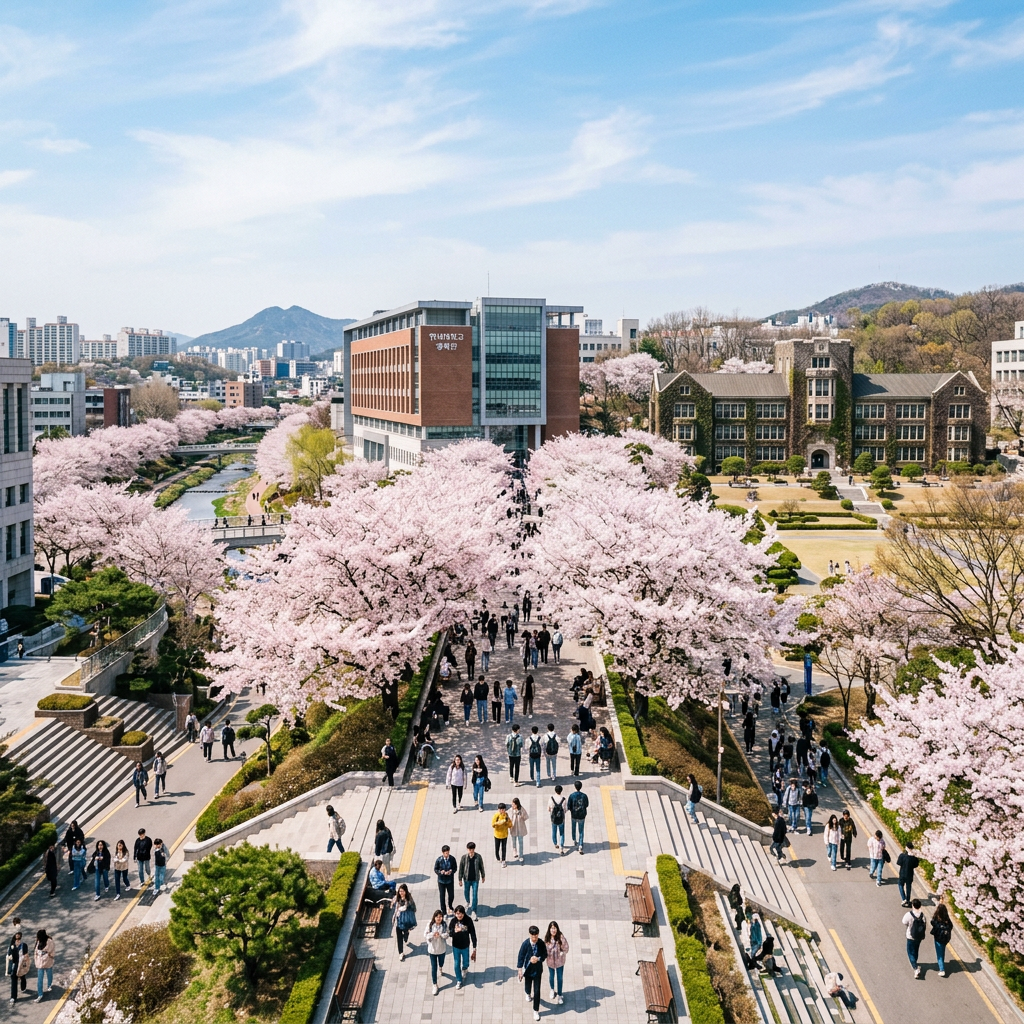
I’ll be direct about this: the undergraduate track, the graduate track, and the visiting-researcher track are not variations on the same journey. They run on different visas, different admission systems, different daily rhythms, and honestly, different emotional experiences.
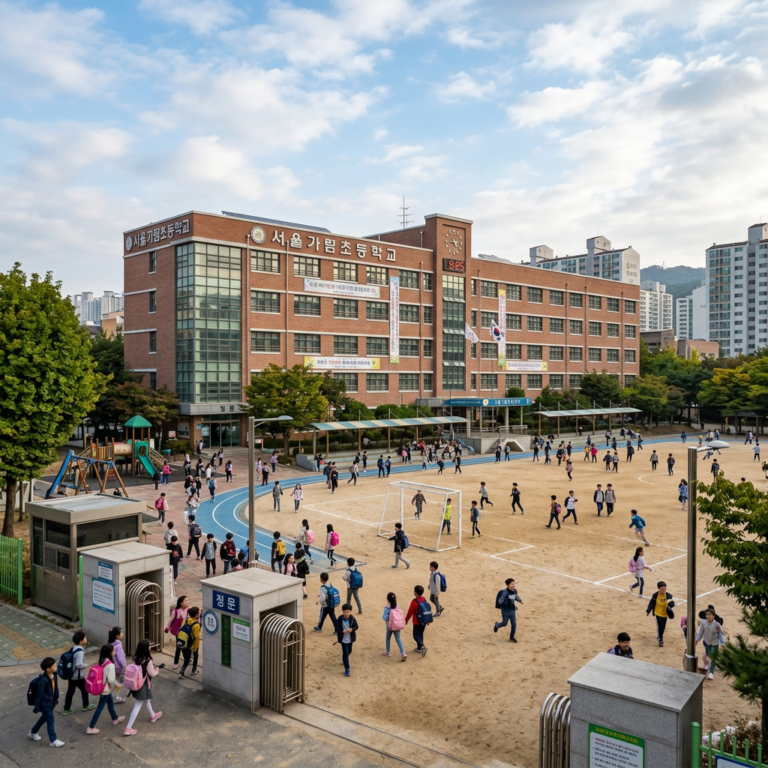
Undergraduate students are usually 18 to 22, applying through a university’s foreign student admission process, and signing up for four years of full immersion — dorm life, freshman orientation, the whole thing.
Graduate students tend to already have a bachelor’s degree, are applying to a specific department or even a specific advisor, and their experience is shaped far more by their lab or research group than by “campus life” in the general sense.
Visiting researchers and postdocs are a different animal entirely — often here for six months to two years, attached to a lab through an existing academic relationship, and frankly less concerned with things like dormitory applications than with funding, publication expectations, and how quickly they can get functional in a new research environment.
I mention this upfront because I’ve watched people spend months preparing for the wrong track simply because nobody separated these three paths clearly at the start.
The Visa Decision That Shapes Everything Else
Once you know which track you’re on, the visa question usually answers itself, but it still trips people up more than it should.
If you’re pursuing a degree — bachelor’s, master’s, or doctoral — you’ll almost certainly need a D-2 student visa. If you’re here purely for Korean language study at a university-affiliated language institute before a degree program, or simply to build language skills, you’re looking at a D-4 visa instead. The distinction matters beyond paperwork: D-2 holders generally have more flexibility to work part-time under Korea’s permitted-activity system, while D-4 holders face tighter restrictions, especially in their first year. For the latest visa requirements and application steps, check the official Hi Korea immigration portal.
Business Consultant’s Note: The mistake I see most often isn’t choosing the wrong visa — it’s assuming the visa category is permanent. I’ve had clients arrive on a D-4 language visa fully intending to transition into a D-2 degree program a year later, and get caught off guard by how much lead time that conversion actually needs. If a language program is genuinely a stepping stone for you, I’d start asking your target university’s international office about the D-4-to-D-2 conversion timeline the moment you arrive, not the semester before you plan to switch.
Visiting researchers occupy a bit of a gray zone — some come in on a D-2 tied to their host institution, others use different categories depending on the nature of the appointment. If you’re at the very top of your field, it’s also worth knowing that Korea recently rolled out a dedicated Top-Tier Visa aimed at elite scientists, which is a different track entirely from the standard student and researcher visas covered here. For everyone else, this is genuinely one of the areas where I tell people not to guess; confirm the specific visa route directly with your host lab or institution’s international affairs office before you assume anything.
Getting In: How Admission Works for International Students in Korea
Here’s where I’ll admit my own bias a little: I think this is the part people over-research the least, given how much it actually determines.
For undergraduate admission, most Korean universities run a dedicated foreign student track, separate from the domestic susi and jeongsi systems. To qualify, both the applicant and their parents generally need to hold only foreign nationality — not Korean nationality at any point in the family’s history. This is a genuinely different eligibility bar than the “overseas Korean” admission track, which is built for students who hold Korean nationality but studied abroad; the two get confused constantly, and if that distinction is relevant to your situation, I’ve written a separate breakdown of exactly where that line falls.
For graduate admission, the process looks less like a formal application funnel and more like relationship-building. In most cases, you’re not just applying to a university — you’re applying to a specific advisor, and in many departments, informally reaching out to a professor before you submit anything is not just accepted, it’s practically expected. I’ve seen strong applicants get rejected simply because they skipped that step and applied cold.
Language requirements vary more than people expect. Some programs, especially in STEM fields at research-focused universities, run substantially in English and may not require a specific TOPIK level at all. Others, particularly in the humanities and social sciences, expect a working conversational level even if the coursework itself is taught in English. If you’re not sure where you currently stand, our complete guide to the TOPIK exam walks through the levels and what each one actually unlocks.
Money, Housing, and the Unglamorous Logistics
Nobody gets excited talking about bank accounts and dormitory waitlists, but in my experience this is where the actual stress lives — not in the big decisions, but in the small administrative gaps nobody warned you about.
Most universities offer on-campus dormitories, but demand consistently outpaces supply, especially in Seoul, and first-year students don’t always get priority the way you’d expect. If you don’t secure a dorm spot, off-campus rentals bring their own hurdles — landlords frequently want a Korean guarantor or an Alien Registration Card (ARC) you won’t have yet in your first weeks in the country.
Banking has a similar chicken-and-egg quality: some banks want an ARC before opening an account, while some student-focused branches near university campuses have simplified processes specifically because they see so many international students.
Health insurance is not optional; as of recent years, mandatory enrollment in Korea’s National Health Insurance applies to international students meeting residency thresholds, and skipping it is not really a viable workaround.
I’d add one honest note here: this logistical stretch — the first four to six weeks — is where I’ve seen the most students struggle emotionally, more than during any academic transition. It’s rarely the coursework that gets people; it’s the accumulation of small bureaucratic friction points landing all at once.
Which Track Fits You? A Quick Comparison
| Undergraduate | Graduate | Visiting Researcher | |
|---|---|---|---|
| Typical visa | D-2 | D-2 | D-2 or host-specific |
| Admission process | Foreign student track via university | Department/advisor-driven application | Arranged through host lab or institution |
| Korean language need | Varies by university and major | Varies widely; often lower in English-taught STEM programs | Usually flexible, lab-dependent |
| Daily life center | Campus, dorms, general student life | Lab, advisor relationship, research group | Lab, project timeline, host institution |
| Typical duration | 4 years | 2–5+ years | 6 months–2 years |
Building Your Own Preparation Timeline
I always tell people to start this process earlier than feels necessary, mostly because document collection — not the actual application — is what eats the calendar.
Preparation Checklist
- Confirm which track (undergraduate, graduate, or visiting researcher) actually matches your situation
- Identify the correct visa category (D-2 vs. D-4) before assuming either one
- For graduate applicants, start reaching out to potential advisors well before the formal deadline
- Check each target program’s specific TOPIK or English proficiency requirements
- Research dormitory application deadlines separately from academic application deadlines — they don’t always align
- Confirm National Health Insurance enrollment requirements with your university’s international office
- Start gathering apostilled transcripts and certified translations at least 3 to 4 months ahead
FAQ
Q. Do I need to speak Korean to study in Korea?
Not necessarily — many graduate programs, especially in STEM, are taught substantially in English, though everyday life and administrative tasks are much easier with at least basic Korean.
Q. Can international students in Korea work part-time while studying?
Generally yes, within limits tied to your visa type and often requiring separate permission, so this is worth confirming directly with your university’s international office before taking any job.
Q. Is it better to apply directly to a graduate program or contact a professor first?
In my experience, reaching out to a potential advisor before applying is the stronger approach in most Korean graduate departments, since many programs treat this informal contact as a normal part of the process.
Q. How different is the foreign student admission track from the overseas Korean track?
Quite different — foreign student admission requires both the applicant and their parents to hold only foreign nationality, while the overseas Korean track is for Korean nationals who studied abroad; the two use separate eligibility rules entirely.
Q. How early should I start preparing?
I’d say six months minimum, and closer to a year if you’re pursuing graduate admission, since advisor outreach and document preparation both take longer than the application itself.
If there’s one thing I want to leave you with, it’s this: the track you choose shapes everything downstream, so it’s worth getting right before you invest months into paperwork built for the wrong path. If you’re weighing your options and want a second opinion on which track actually fits your situation — and eventually how to think about your career path after graduation — AMP Interpro’s cultural exchange team is happy to talk it through. Contact us anytime.
Disclaimer: Visa categories, admission requirements, and health insurance rules for international students in Korea change periodically and vary by university and individual circumstance. Please confirm current requirements with HiKorea, your target university’s international office, or Korea’s National Health Insurance Service before making enrollment or relocation decisions.