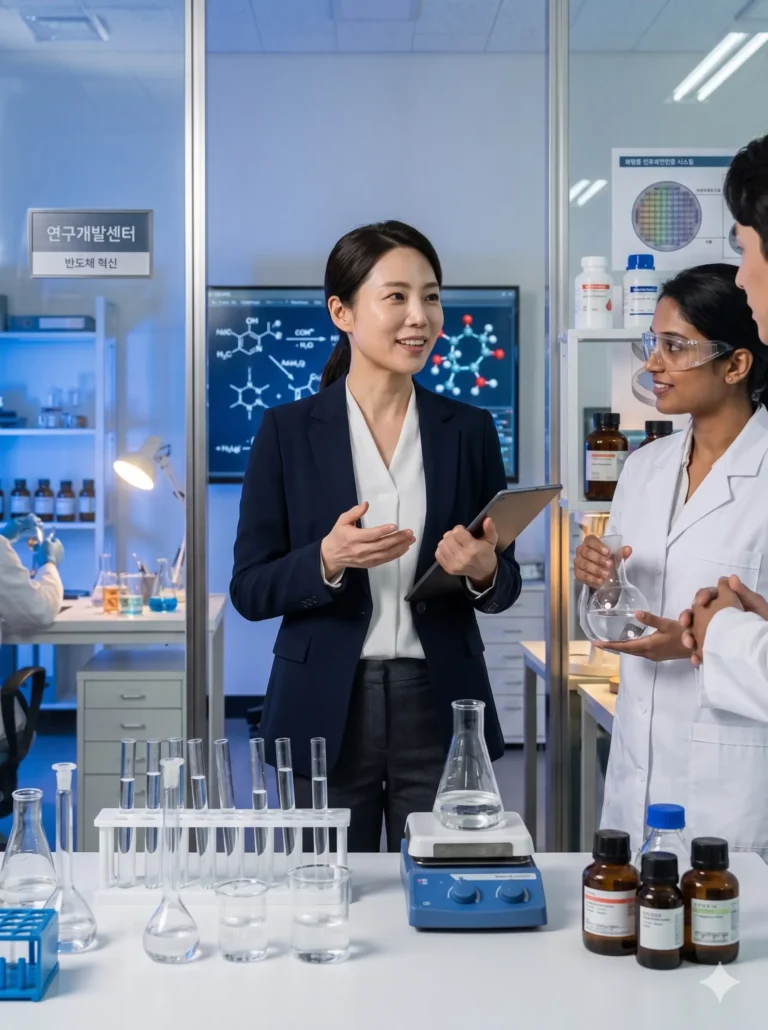
Have you noticed more of your classmates suddenly getting interview calls from Samsung or Hyundai, and wondered how they even found out these companies were hiring foreign students in Korea at all? You are not missing some secret channel. Korea’s largest conglomerates have been quietly building out formal hiring tracks specifically for foreign students over the past few years, and most international students never hear about them until a friend happens to mention it.
In our work advising foreign job seekers in Korea, this is one of the fastest-growing areas of interest we see. A handful of major groups now run structured programs aimed squarely at foreign students studying in Korea, separate from the general job platforms covered in our guide to Korea’s top job search platforms. This hub article maps out what exists today, how each track actually works, and where to go deeper on each piece of the process.
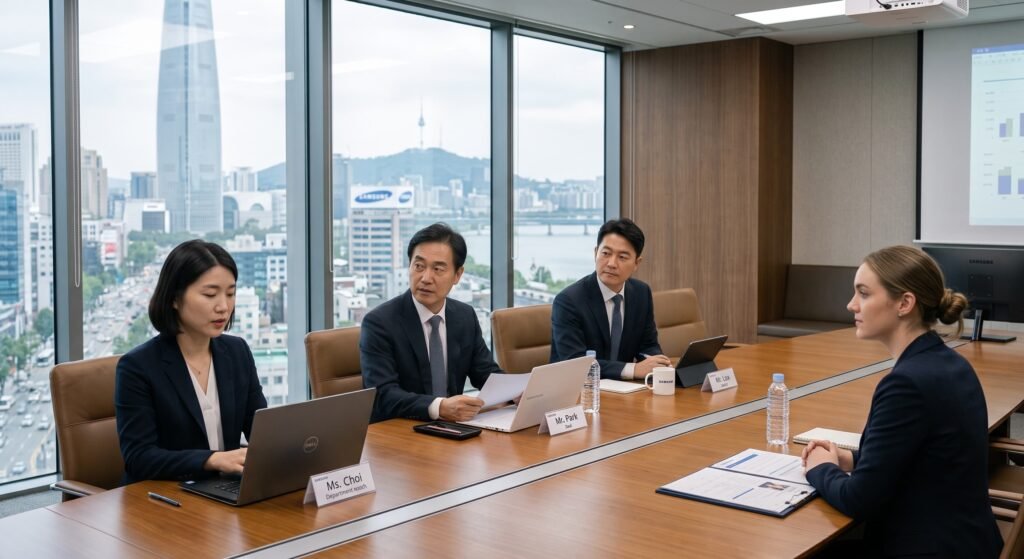
What “Special Recruitment for Foreign Students in Korea” Actually Means
The Korean term used for these programs is often teukbyeol-chaeyong, roughly “special recruitment.” It does not mean lowered standards. It means a track built around the specific realities of being a foreign applicant: TOPIK score requirements instead of assumed native fluency, visa eligibility screening built into the process, and sometimes more flexible credit given for degree programs completed in Korea rather than work history back home.
These tracks exist because Korea’s biggest employers are competing globally for technical talent, especially in semiconductors, batteries, and R&D-heavy fields, and simply do not have enough Korean engineering graduates to fill every seat. That competitive pressure is what pushed Samsung to formalize and expand its program, and it is the same logic behind Hyundai’s and SK’s growing internship-to-hire pipelines.
Business Consultant’s Note: A client of ours, a materials engineering master’s student, spent nearly a year applying through general job boards with almost no response. Once we pointed her toward Samsung’s dedicated foreign student track, she had two interview offers within a single hiring cycle. The jobs she was qualified for existed the whole time. She simply had not been looking in the right channel.
Samsung: The Most Structured Track Among the Majors
Samsung runs the most established version of this system. The company began a domestic foreign-hire recruitment cycle in 2023, initially limited to Samsung Electronics, Samsung Display, and Samsung SDI. Starting in 2025, Samsung expanded participation to ten affiliates, adding companies such as Samsung Electro-Mechanics, Samsung Biologics, Samsung C&T, and Samsung Bioepis.
Samsung also loosened its experience requirement during this expansion. Previously, candidates needed a bachelor’s degree plus two years of relevant work experience. Now, two years spent in a master’s or doctoral program counts toward that requirement, which opens the door to far more graduate students. Applicants need TOPIK Level 3 or higher, and both the document screening and interview stages are conducted in Korean.
LG and SK: Internship-First Pathways
LG and SK take a somewhat different approach, leaning more heavily on internship-to-hire pipelines rather than a single standalone application track. LG Electronics has run foreign-student-specific hiring notices directly, while LG CNS operates a “Global Internship” program aimed at converting strong interns into full-time hires.
SK’s approach follows a similar internship-first logic. SK hynix, for example, runs a Global Internship specifically for inforeign students in Korea in semiconductor-related fields, giving participants hands-on exposure before any full-time offer is discussed. If you are targeting SK or LG, treating the internship stage as your actual application, not just a resume-builder, is the more realistic strategy.
Hyundai Motor: The Highest Language Bar, Internship-Based Entry
Hyundai’s foreign student program is built almost entirely around a summer internship that leads into full-time consideration, rather than a direct hire track. The requirement that stands out immediately is language: Hyundai asks for TOPIK Level 4, a notably higher bar than Samsung’s Level 3.
The internship itself typically runs about five weeks, full-time, with a document screening stage followed by a non-in-person interview and a personality assessment. Strong performers during the internship period are interviewed for full-time roles before the program even ends. Hyundai also runs a separate track for candidates who already hold a PhD in engineering fields from overseas, aimed at AI, batteries, robotics, and future air mobility, which does not require going through the student internship first.
Business Consultant’s Note: We often see candidates assume Hyundai’s internship is “just an internship” and treat it casually. In practice, it functions as an extended, five-week interview. Candidates who show up prepared to perform from day one consistently get further than those who treat it as a formality.
Beyond the Big Four: Hanwha and Other Groups
Samsung, LG, SK, and Hyundai are not the only groups running these programs. Hanwha Aerospace, for example, ran a dedicated foreign student special recruitment cycle in the first half of 2026, open to foreign nationals with a bachelor’s or master’s degree, or those expecting to graduate that year, holding a work-eligible visa or the ability to change status. Given Korea’s defense and aerospace sector’s growing hiring needs, expect more mid-size and large groups to formalize similar tracks in the coming years, even if they are not household names abroad yet.
How the Process Actually Works, Start to Finish
While each company’s exact steps differ, the shape of the process is broadly consistent across these tracks: document screening, followed by one or more interview rounds, sometimes a personality or aptitude test, and for internship-based tracks, a working period before a final full-time decision. We cover the full step-by-step breakdown, including how to prepare your documents and what each interview stage actually evaluates, in our companion post on the special recruitment process from application to offer.
Company Comparison: Special Recruitment Tracks at a Glance
| Company | Track Type | TOPIK Requirement | Process Style |
|---|---|---|---|
| Samsung | Direct hire, expanded to 10 affiliates | Level 3+ | Document + Korean-language interview |
| LG | Internship-to-hire (LG CNS Global Internship, LG Electronics notices) | Varies by affiliate | Internship performance-based |
| SK | Internship-to-hire (SK hynix Global Internship) | Varies by affiliate | Internship performance-based |
| Hyundai | Internship-to-hire, separate PhD track | Level 4 | Document + interview + personality test |
| Hanwha Aerospace | Direct hire | Not always specified | Document screening + standard hiring rounds |
What You Should Be Doing Right Now to Prepare
If you are still a year or more out from graduation, TOPIK preparation should be your first priority, since Level 3 or 4 takes real time to reach and gates almost everything else on this list. If you are closer to applying, focus on tracking each company’s official careers page directly, since these programs are announced on a rolling basis rather than a single fixed calendar, and confirming your visa status will allow you to complete an internship or start full-time work without a gap.
Preparation Checklist for Foreign Students in Korea Before You Apply
- Confirm your TOPIK level meets the specific company’s requirement, not just a general benchmark
- Check whether the track is a direct hire or an internship-to-hire pipeline, since your strategy should differ
- Bookmark each target company’s official careers page and check it on a rolling basis
- Confirm your current visa status supports internship work or a transition to E-7 employment
- Prepare a Korean-language self-introduction, since most interviews are conducted in Korean
- Have your academic transcripts and any research publications ready in both Korean and English
A Note on Visas Before You Apply
Almost every track described above eventually leads to the same destination: an E-7 employment visa, if you are hired full-time. Eligibility rules and required documents for E-7 sponsorship can change, so we always recommend confirming the current requirements directly through Korea’s official HiKorea immigration portal before you finalize your application timeline, rather than relying on what a company’s recruitment notice said in a previous year. The same caution applies to TOPIK requirements and participating affiliate lists in this article: companies adjust these year to year, so treat the figures here as a starting point and verify against each company’s official careers page before you apply.
Frequently Asked Questions
Do I need to be fluent in Korean to apply through these tracks?
You need enough Korean to meet the required TOPIK level, typically Level 3 or 4, but full native fluency is not expected. Document screening and interviews are usually conducted in Korean, so functional business-level Korean is the realistic minimum.
Is Samsung’s program open to any nationality?
Yes, Samsung’s foreign student track is not limited by nationality. The core requirements are a relevant degree, the required TOPIK level, and a visa status that allows employment in Korea.
What happens if I do not pass an internship-to-hire program like Hyundai’s or SK’s?
You are not permanently excluded from that company. Many candidates who do not convert from an internship reapply through general recruitment channels in later cycles, sometimes with a stronger application the second time.
Are these programs only for engineering and technical majors?
Most of the highest-profile tracks lean heavily toward technical fields, since that is where the talent shortage is most acute, but business, marketing, and support-function openings do appear within these same companies, usually through separate general hiring channels.
How early should I start preparing if I am still in my first year of graduate school?
Starting TOPIK preparation as early as possible is the single highest-leverage move, since reaching Level 3 or 4 comfortably before your final year gives you real flexibility in when and where you apply.
Understanding which company runs which type of track for foreign students in Korea, and matching your own timeline and Korean level to the right one, is often the difference between spending a year applying blindly and landing an offer in a single cycle. If you would like help evaluating which of these tracks fits your background, or support navigating the E-7 visa process once you receive an offer, AMP Interpro’s Global HR & Recruiting team can walk through it with you. Get in touch here.