Did you just land in Korea with your kids in tow, and every conversation about school placement in Korea leaves you more confused than before? You’re not alone. At AMP Interpro, this is one of the first things nearly every relocating family asks us: “What grade will my child be placed in?” “The school year starts in March, so can we still enroll now?” “What’s the actual difference between an international school and a local one?”
These are completely fair questions. Korea’s education system runs on a different logic than what most families are used to back home, from how grades are assigned to when the year actually begins. In this guide, we’ll walk you through the big picture of Korea’s education system, from kindergarten all the way to university, based on what we’ve learned helping families navigate this exact transition. Think of this as the starting point before you dive into the rest of our education series, which covers school comparisons, enrollment procedures, and university admissions in more detail.
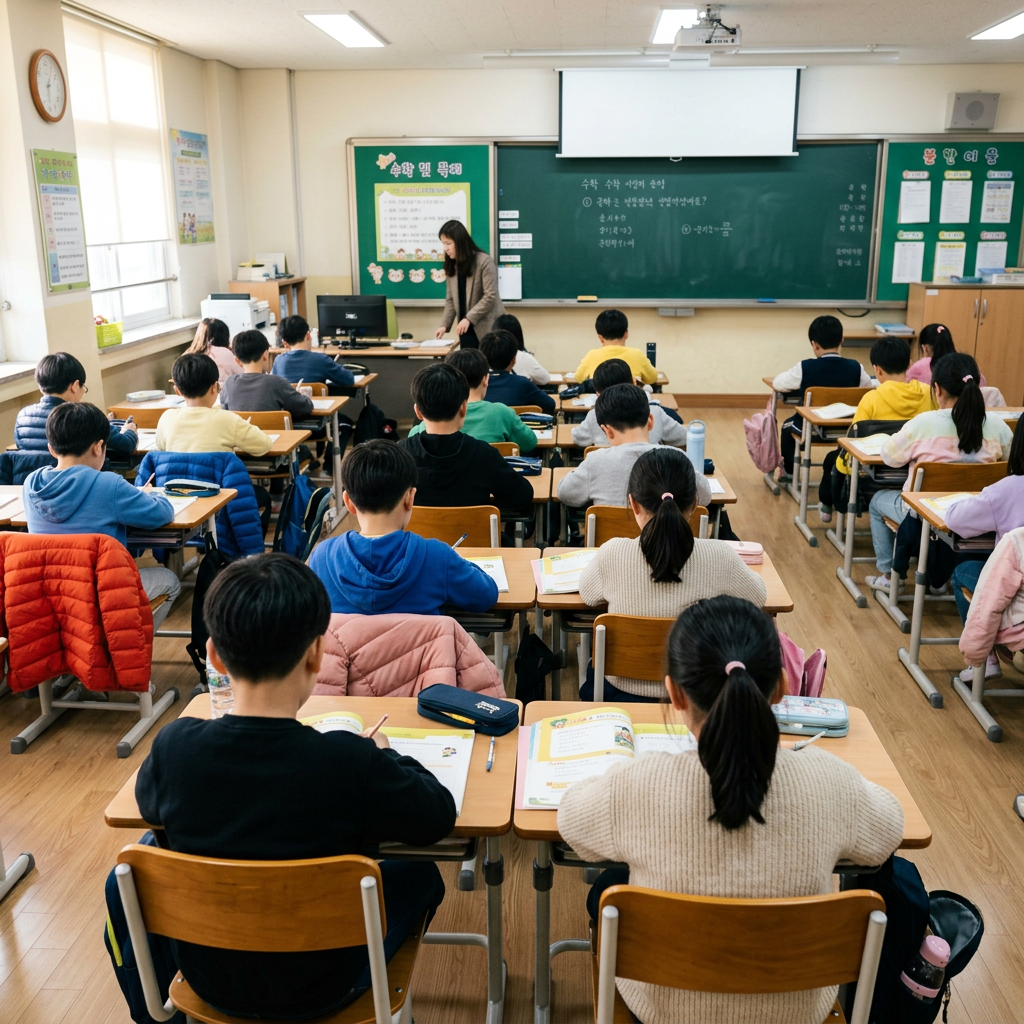
Table of Contents
- 1. The Big Picture: How Korea’s School System Is Structured
- 2. How Grade Placement Actually Works
- 3. Why Korea’s School Year Starts in March
- 4. Public Schools vs. International Schools vs. Foreign Schools
- 5. What Adult Learners Should Know
- 6. Frequently Asked Questions
1. The Big Picture: How Korea’s School System Is Structured
Korea follows a 6-3-3-4 structure: kindergarten (ages 3-5), elementary school (6 years), middle school (3 years), high school (3 years), and university (4 years, or 2-3 years for junior colleges). Elementary and middle school together make up Korea’s 9 years of compulsory education.
One American family we worked with was used to thinking of K-12 as one continuous experience, so they were surprised to learn that in Korea, elementary, middle, and high school are treated as entirely separate institutions, each with its own entrance ceremony, graduation, and often a different building altogether. Moving from elementary to middle school, and again from middle to high school, means going through a fresh application or placement process each time. That’s the biggest structural difference from many countries’ school systems.
It also means families relocating to Korea need to think about school transitions differently than they might back home. A child who’s about to start sixth grade, for instance, isn’t just moving up a grade level in the same building; they’re heading into an entirely new school with a new set of classmates, a new uniform, and often a new commute. Knowing this ahead of time helps parents set realistic expectations for how much adjustment their child will need, both academically and socially, in that first year.
Suggested image placement: Diverse group of students in a Korean elementary school classroom (alt text same)
| Stage | Age | Duration | Notes |
|---|---|---|---|
| Kindergarten | 3-5 | 1-3 years | Optional, not compulsory |
| Elementary school | 6-11 | 6 years | Compulsory |
| Middle school | 12-14 | 3 years | Compulsory |
| High school | 15-17 | 3 years | Not compulsory, but enrollment rates are very high |
| University | 18+ | 4 years (2-3 for junior colleges) | Admission via Susi or Jeongsi tracks |
2. How School Placement in Korea Actually Works
This is where most foreign parents get tripped up. Korean public schools place students by age, not by the grade they were previously in. Specifically, placement is based on whether a child’s birthday falls before or after March 2 of a given year, following the Korean international age standard used in schools.
For example, a child born in May 2015 might have been a grade behind their peers back home, but in Korea, they’ll typically be placed according to their age-based grade rather than their previous grade level. That said, schools and local education offices can, in some cases, consider a student’s academic history and Korean language ability and adjust placement by one grade.
If this might apply to your child, it’s worth having academic records (report cards, enrollment certificates) translated and notarized ahead of time. Because these decisions vary case by case, we always recommend confirming the exact placement criteria directly with your local Office of Education, and you can review the underlying rules in the Elementary and Secondary Education Act on Korea’s Ministry of Government Legislation site.
3. Why Korea’s School Year Starts in March
Korea’s academic year runs from March 1 to the end of February the following year, which is the opposite of the August or September start most countries use. The year is split into two semesters: the first from March to July, and the second from September to the following February, with summer break (July-August) and winter break (December-February) in between. You can check the official academic calendar each year on the Korean Ministry of Education‘s website.
This timing matters more than it might seem. If your family relocates in September, your child will effectively be transferring mid-semester, which can make classroom placement and adjustment feel a bit disorienting at first. Moving in February or March, on the other hand, lines up with the start of a new school year and tends to make the transition noticeably smoother. If you have any flexibility in your relocation timeline, it’s worth factoring the school calendar into your planning.
4. Public Schools vs. International Schools vs. Foreign Schools
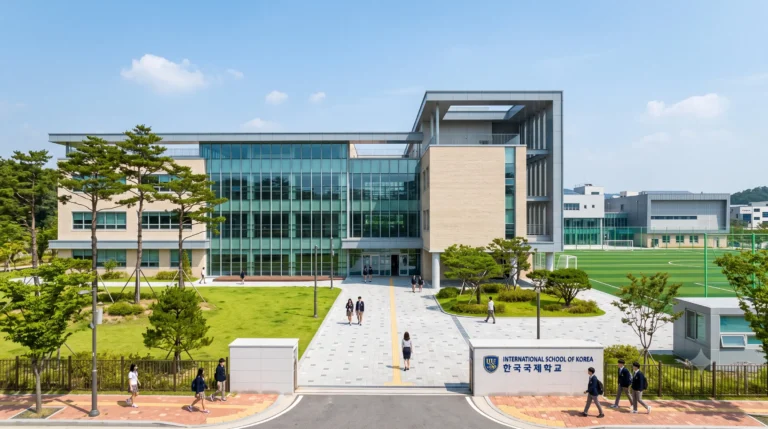
Suggested image placement: Exterior view of an international school campus in Seoul (alt text same)
When it comes to schooling your child in Korea, you generally have three paths to choose from.
- Public and private local schools: These follow Korea’s national curriculum, with instruction primarily in Korean. Tuition costs are the lowest of the three options, but children who aren’t yet comfortable in Korean will need extra support, such as Korean language classes designed for newcomers.
- Foreign schools: Under current regulations, these schools generally require that the student or at least one parent has lived abroad for a minimum period, which limits eligibility for some families. Several operate in major cities like Seoul, and most follow a home-country curriculum (American, British, etc.) or the IB program.
- International schools: Schools like those in Jeju’s international school district are set up differently. Depending on the specific school and program, Korean nationals may also be eligible to enroll under certain conditions, which sets them apart from foreign schools.
Tuition, admission requirements, and waitlist practices vary significantly from school to school, and we’ll break those down in more depth in the next post in this series. If your child has already spent years in school abroad, a foreign school may be the more natural fit. If your family is hoping to integrate more deeply into Korean life, a local public school is also a solid option worth considering.
There’s no single “right” choice here, and the answer often depends on how long your family plans to stay in Korea. Families on a two- or three-year corporate assignment tend to lean toward foreign schools, since the curriculum transfers more easily if the next move is to another country. Families planning to settle long-term, on the other hand, often find that a local school helps their children build friendships and Korean language skills that pay off for years to come. We’ve sat down with plenty of parents weighing exactly this trade-off, and it’s rarely a quick decision, so give yourself time to visit a few schools in person before committing to one.
5. What Adult Learners Should Know
This guide focuses mainly on families with school-age children, but there are education paths worth knowing about for adult learners too. If you want an official way to certify your Korean language skills, many people work toward the TOPIK exam. We’ve covered exam structure and prep strategy in our Complete Guide to TOPIK.
If you’re looking for education that also supports your broader settlement and immigration process, the Ministry of Justice’s KIIP (Korea Immigration and Integration Program) is another strong option, which we cover in our KIIP guide. And if you’re on the other side of the classroom and interested in teaching English or another language in Korea, our E-2 visa guide walks through what that path looks like.
Pre-Move Checklist
Suggested image placement: Foreign family organizing documents while preparing to relocate to Korea (alt text same)
If you’re planning to enroll your child in a Korean school, having these items ready in advance will make your first semester much smoother.
- Child’s birth certificate and passport copy
- Report cards and enrollment certificates from the previous school (translated and notarized if possible)
- Immunization records
- Family relationship documentation
- Research into your preferred school type (local, foreign, or international)
- A comparison of your move timing against Korea’s March/September school calendar
Frequently Asked Questions
Q1. At what age can children start school in Korea?
Elementary school starts at age 6, with the exact cutoff determined by whether a child’s birthday falls before or after March 2. Before that, many children attend kindergarten, which is optional.
Q2. Can we enroll mid-semester if we move to Korea partway through the school year?
Yes, mid-semester enrollment is possible. That said, classroom placement and support procedures vary by school and local education office, so it’s worth reaching out ahead of time.
Q3. Can my child attend a local public school with no Korean language ability at all?
Yes. Many schools run preparatory multicultural classes or Korean language support classes for newcomers. We’ll cover the enrollment process for this in more detail in the next post in this series.
Q4. Are international schools and foreign schools the same thing?
Not quite. While both often follow foreign curricula, their admission eligibility requirements (such as overseas residency history) and the regulations they operate under are different. We’ll compare them in detail in our next post.
Q5. Can we request a different grade placement if we disagree with the initial assignment?
In some cases, yes, based on academic history or Korean language ability, through discussion with the school principal or local education office. Because the final decision varies case by case, it’s best to confirm directly with the relevant authority.
Final Thoughts
Once you understand Korea’s 6-3-3-4 structure, the March school year, and age-based grade placement, everything else about choosing a school or enrolling your child becomes much easier to navigate. In our next post, we’ll compare local schools, international schools, and foreign schools in more detail, covering tuition and curriculum, before moving on to enrollment procedures and university admissions later in this series.
If figuring out school placement in Korea or transfer paperwork feels overwhelming, AMP Interpro’s Cultural Exchange & Immersion service can help you navigate everything from choosing the right school to settling in. Get in touch with us today.




2 Comments